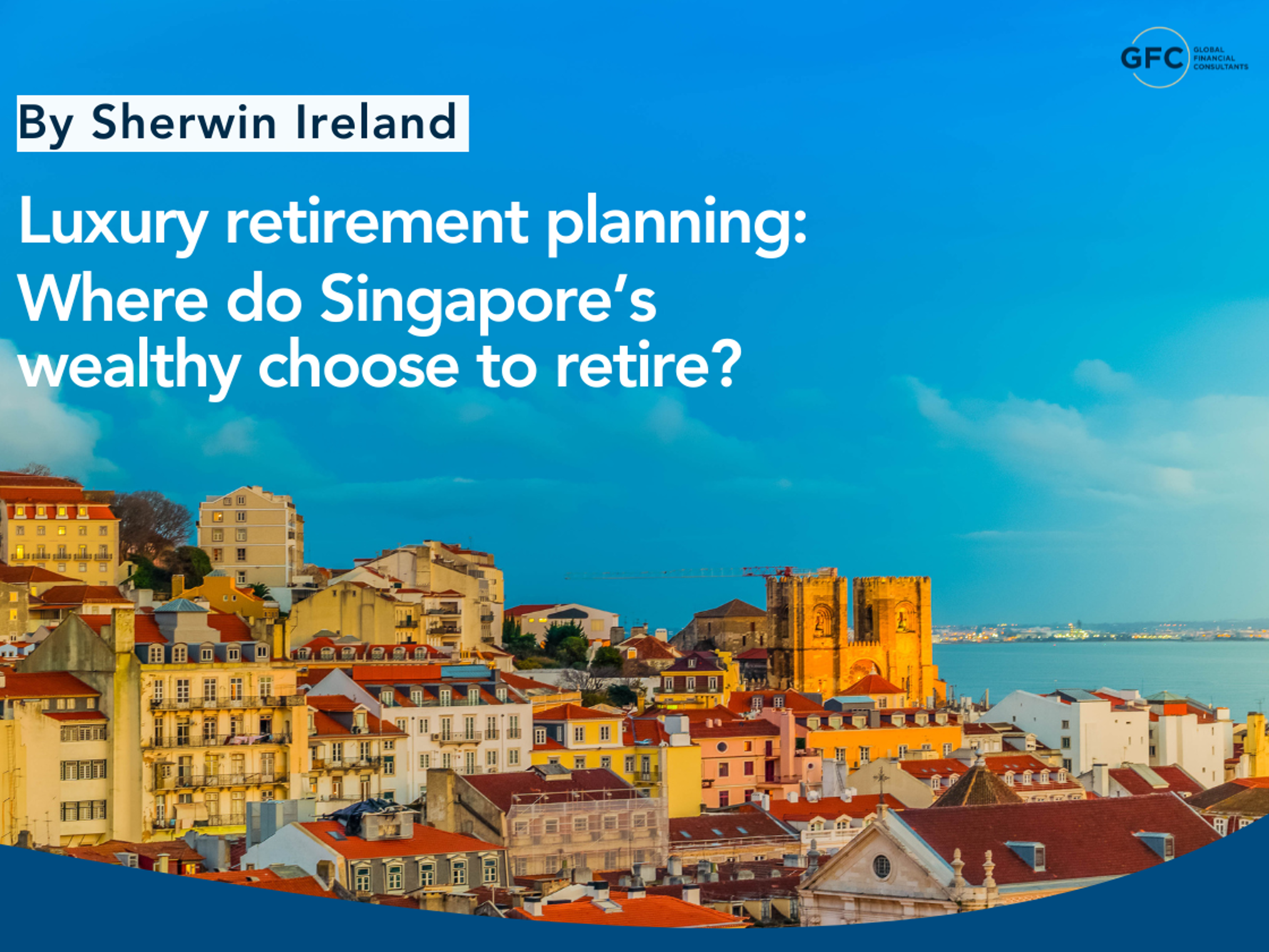
Luxury retirement planning: Where do Singapore’s wealthy choose to retire?
Global Financial Consultants
By Sherwin Ireland
After decades of building businesses, managing portfolios, and navigating one of the world’s most competitive cities, many high-net-worth residents in Singapore arrive at a question that feels both exciting and unfamiliar: where do we actually want to live now?
The answer, increasingly, is not a single place. It is a well-researched choice shaped by healthcare access, tax efficiency, lifestyle preferences, climate, and the desire for a home that feels genuinely fulfilling rather than merely comfortable. Here is a look at where Singapore’s affluent retirees are heading, and what is drawing them there.
Why so many are looking beyond Singapore
Singapore remains one of the world’s finest places to live, full stop. Its healthcare system is world-class, its infrastructure is exceptional, and Changi Airport connects it to almost everywhere. But for retirees with the freedom to choose, a few things begin to matter differently.
Cost of living in Singapore, particularly for property, is among the highest in Asia. Some retirees find themselves drawn to places where their wealth stretches further, where the pace of life is slower, and where the climate or culture offers something new. With longer life expectancies becoming the norm globally, the retirement years can easily span two or three decades. That changes the calculus considerably. It is worth thinking about where you want those decades to unfold.
Portugal: Europe’s sunlit alternative
If Europe is on the horizon, Portugal deserves serious attention. It has quietly become one of the continent’s most sought-after retirement destinations, and for good reason. The climate is warm and sunny for much of the year, the cost of living is considerably more manageable than in France, Switzerland, or the UK, and the country offers a quality of life that is hard to find elsewhere in Western Europe.
Lisbon and Porto are both genuinely beautiful cities, rich in culture, history, and food. The Algarve coast, meanwhile, offers a more relaxed resort-style environment that has attracted a large and well-established international community over the years. Healthcare standards in Portugal are solid, and private care is both high quality and affordable by European standards.
For Singapore residents considering a move, there are two main visa pathways worth knowing about. The Portugal D7 Visa suits those with reliable passive income, requiring proof of accommodation, sufficient savings, and a minimum monthly income of around S$1,370 from sources such as pensions, rental income, or investments. For those looking to invest, the Portugal Golden Visa Programme offers a five-year residence-by-investment route for non-EU nationals.

Thailand: Warmth, wellness, and value
Thailand has long held appeal for retirees from across the world, and affluent retirees are no exception. The country combines a genuinely warm culture, stunning natural scenery, and a private healthcare sector that is consistently rated among the best in Southeast Asia. Bangkok’s internationally accredited hospitals draw medical tourists from around the region.
Chiang Mai offers a cooler climate and a thriving expat community. The southern islands provide something closer to a resort lifestyle year-round. Thailand rewards those who take time to explore before committing.
For those aged 50 and above, the Non-Immigrant O-A visa is the main retirement pathway. Applicants are generally required to demonstrate a monthly income of at least S$2,590 or maintain a Thai bank balance of S$31,900, along with health insurance providing a minimum coverage of approximately S$127,600. The visa is renewable annually, making it a practical option for long-term stays. As with all visa programmes, verifying current requirements directly with the Thai government or Royal Thai Embassy before applying is strongly advisable.
One important financial note: since 2024, Thailand taxes foreign-sourced income that is remitted into the country for tax residents, so it is worth factoring this into any long-term financial planning and taking advice accordingly.
The UAE: Tax-free luxury
Dubai and Abu Dhabi have emerged as serious retirement destinations for the globally mobile and wealthy. There is no personal income tax, infrastructure is world-class, and both cities offer a kind of luxury lifestyle that is genuinely hard to match anywhere else. The UAE’s five-year retirement visa is open to those who meet one of three criteria: a UAE investment or real estate holding worth at least S$349,746; a financial deposit of no less than S$349,746 transferred to a UAE institution within 60 days of permit issuance; or a fixed annual income of at least AED 83,939.
The UAE’s location also makes it a practical hub for those with family or business interests across Asia, Europe, and Africa. Healthcare in both cities has improved dramatically over the past decade, with a growing number of internationally recognised hospitals and specialists.

Malaysia: The practical neighbour
For many residents in Singapore, Malaysia is the natural first consideration, and for good reason. The proximity is unbeatable, English is widely spoken, and the cultural familiarity makes the transition feel less like emigration and more like relocation.
The Malaysia My Second Home programme (MM2H) offers a structured path to long-term residency. It has several tiers, and the requirements around property purchases and bank deposits vary depending on which you apply for. Visa validity ranges from five to twenty years depending on the tier chosen, and all permits are renewable.
What makes Malaysia consistently attractive is that private healthcare here is genuinely excellent, particularly in Kuala Lumpur and Penang, and it comes at a fraction of what similar care would cost in Singapore or London. Malaysia also operates a territorial tax system, which means foreign retirement income is generally not taxed unless it is brought into the country. For those with income streams from overseas investments, that could be a meaningful consideration worth exploring with a financial adviser.
Penang in particular has become something of a retiree’s city, blending heritage architecture, excellent food, a strong arts scene, and a relaxed rhythm of daily life.
What matters most
Singapore’s wealthy retirees tend to be thoughtful planners. The same qualities that built their wealth tend to shape how they approach this next chapter: research, patience, and an eye for the long term. Spending extended time in any destination before committing is genuinely the wisest first step. Living somewhere can be a different experience from visiting it, and the best retirement decisions are almost always the well-tested ones.
The golden years, planned well, can be the most rewarding chapter of all. Whether you see yourself retiring in nearby Malacca or enjoying life in Lisbon, thoughtful preparation can help turn your retirement aspirations into reality. If you’d like to explore the possibilities of retiring overseas, feel free to schedule a complimentary session with me to explore the pathways to get there.
Sherwin specialises in personalised financial planning, helping clients bring structure and clarity to their financial decisions. He works closely with individuals to develop tailored strategies across investments, savings, and long-term planning.
Sherwin is an authorised representative of Global Financial Consultants Pte Ltd- MAS License No- FA100035-3.
To learn more about how he may be able to help you, please contact him:
Phone number: +65 8973 7124
Email address: sherwin.ireland@gfcadvice.com
LinkedIn page: https://www.linkedin.com/in/sherwinireland/
Click here to book a complimentary consultation: Book here
General Information Only: The information on this site is of a general nature only. It does not take into account your individual financial situation, objectives or needs. You should consider your own financial position and requirements before making a decision.
*Please note that Sherwin Ireland is not a tax agent or accountant and none of the content outlined here should be taken as personal advice. You should consult your tax agent and financial adviser to review your current personal finances and financial goals to consider whether this strategy is appropriate for you.